
Clear Aligners: How SureSmile Compares to Braces
Key Takeaways
- Clear aligners use a series of custom, removable trays to gradually shift teeth into place, guided by a digital scan and treatment plan rather than the brackets and wires used in traditional braces.
- Aligners work best for mild to moderate orthodontic issues like crowding, spacing, and minor bite problems. Severe misalignments or complex rotations are often better suited to traditional braces.
- SureSmile integrates directly with Broadwater's digital scanning technology, helping streamline the path from initial scan to treatment plan and, in many cases, reducing the number of refinements needed along the way.
- Success with clear aligners depends heavily on patient compliance. Trays need to be worn 20 to 22 hours a day, and a real evaluation, not guesswork, is the only reliable way to confirm candidacy.
A Straightforward Look at Clear Aligners
Most adults would prefer straighter teeth. Fewer of them want to walk into a meeting, a wedding, or a first date with a mouth full of metal braces. That tension, wanting the result without the look, is exactly why clear aligners have become one of the most requested orthodontic treatments at dental practices across the country. Patients ask about them constantly. Sometimes they've already researched three different aligner brands before they even sit down in the chair.
At Broadwater Dental & Facial Aesthetics, that conversation usually leads to SureSmile. It's not the most heavily advertised name in the clear aligner space (Invisalign still owns that spot), but it's earned a place in modern orthodontics for good reason. Patients want to know how it works, how it stacks up against braces, and whether they're even a good candidate. Those are fair questions, and they deserve real answers, not just marketing language.
What Clear Aligners Actually Do
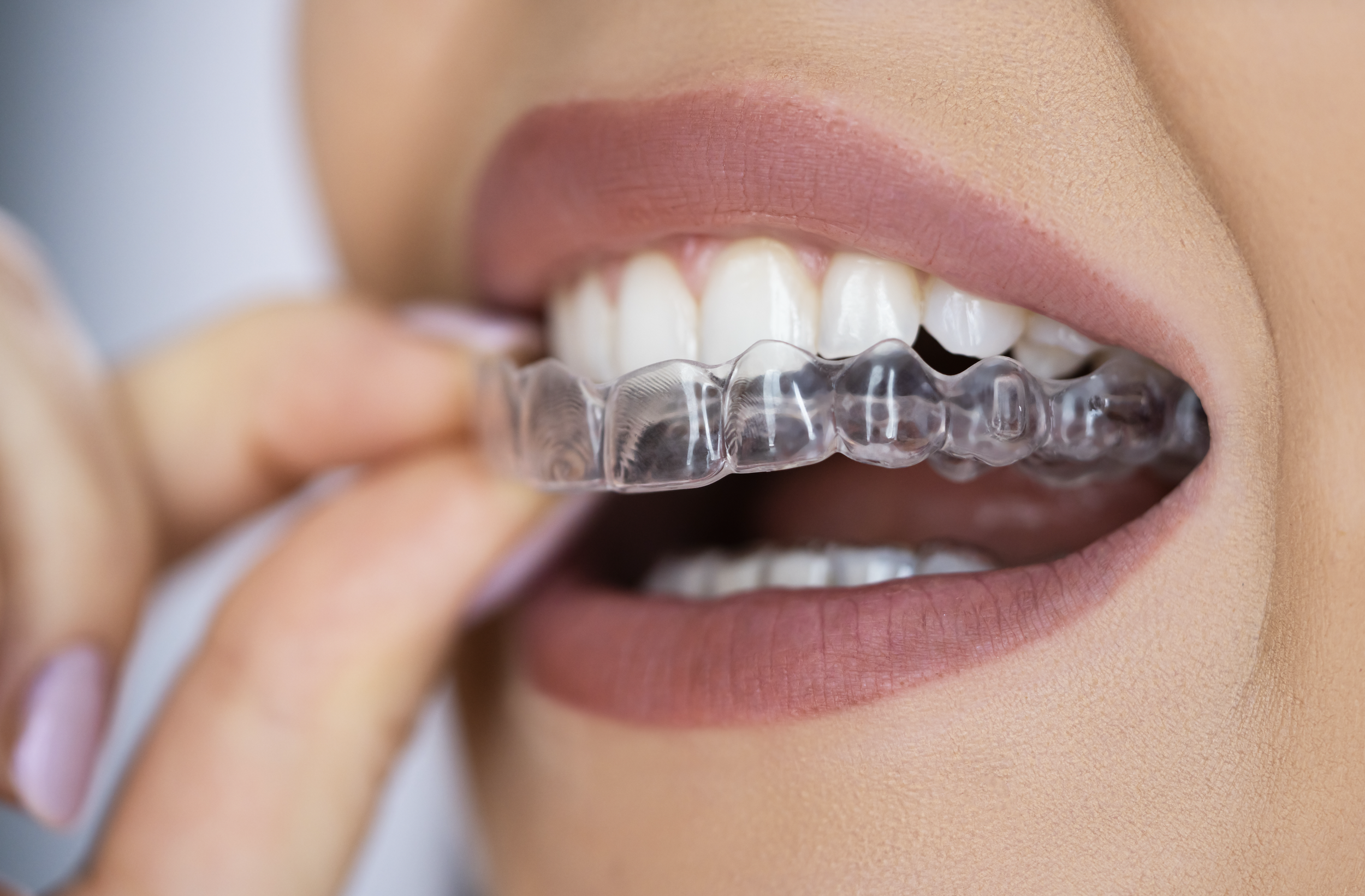
Strip away the branding and clear aligners are pretty simple in concept. A dentist takes a digital scan of your teeth, maps out where they need to move, and then a lab produces a series of clear plastic trays. Each tray nudges your teeth slightly closer to the final position. You wear one set for about one to two weeks, then move on to the next, repeating that process until treatment is complete.
The mechanics aren't new, either. Removable appliances similar to today's aligners have been around since the 1940s, according to a National Institutes of Health review of orthodontic aligner history. What changed is the precision. Digital scanning lets a dentist see, plan, and predict how teeth will shift in a way that old-school impressions never could. The same review notes that there are now dozens of clear aligner products on the market, which says something about how mainstream the category has become.
That growth hasn't gone unnoticed by regulators, either. The American Dental Association recently introduced the first U.S. standard addressing the materials used to manufacture orthodontic aligners, a sign that the category has matured enough to need consistent benchmarks across manufacturers.
Most people wear their aligners 20 to 22 hours a day. That sounds like a lot until you realize you're only taking them out to eat and brush your teeth. Compliance matters here. Skip too many hours and treatment slows down or stalls entirely. It's one of the few parts of orthodontic care that's genuinely in the patient's hands rather than the dentist's.
Clear Aligners vs Braces: What's the Real Difference
This is probably the question Broadwater hears most. Clear aligners vs braces isn't really a question of which one is "better." It's a question of which one fits a specific mouth, lifestyle, and tolerance for visible hardware.
Traditional braces are fixed. Brackets and wires stay on the teeth around the clock, which means there's no relying on a patient to remember to put them back in. That makes braces the more predictable option for kids and teens who might not be disciplined enough to wear aligners for the required hours. Braces also tend to handle more severe cases. Significant crowding, major bite misalignments, or complex rotations are often better managed with the constant force that fixed appliances provide.
Aligners, on the other hand, win on comfort and discretion. There's no metal scraping the inside of your cheek. No food restrictions, since you take the trays out before eating. Brushing and flossing stay normal too, which honestly makes oral hygiene easier during treatment compared to navigating around brackets and wires. The tradeoff is that aligners work best for mild to moderate issues, crowding, spacing, minor bite problems. Severe cases sometimes still need braces, or a combination approach.
There's also the visibility factor, which matters more to adults than most people expect. Plenty of grown patients have wanted straighter teeth for years and never pursued it because they didn't want to look like a teenager with braces at a board meeting. Aligners removed that barrier for a lot of people. That alone has probably driven more adult orthodontic treatment over the last decade than any single innovation in the field.
Why SureSmile
So where does SureSmile fit into all of this? It's one of several clear aligner systems on the market, and it happens to be the one Broadwater uses for most cases.
A few things make it worth mentioning specifically. SureSmile integrates directly with digital scanning workflows, which means the process from scan to treatment plan moves faster than it would with older impression-based systems. Fewer steps, fewer chances for something to get lost in translation between the scan and the lab. Many practices using SureSmile also report fewer refinement rounds needed to finish a case, though it's worth saying plainly that this varies by patient and by how complex the case is to begin with. Nobody can promise a perfectly straight line to the finish.
This is also where Broadwater's existing technology comes into play. The practice already uses 3Shape 3D scanning for digital impressions across multiple treatments, not just aligners. That scanner captures a precise model of a patient's teeth in minutes, without the gooey impression trays that used to make people gag in the chair. Feeding that same digital workflow into SureSmile aligner planning keeps everything connected instead of bouncing between different systems and formats.
Who's a Good Candidate for Clear Aligners
Not everyone is a good fit, and that's worth saying directly instead of dancing around it. Invisible aligners for adults tend to work best for patients with fully developed teeth and mild to moderate orthodontic concerns, crowding, gaps, minor bite issues. Teens with all their adult teeth in place can often qualify too, depending on the specific case.
A few things tend to rule someone out, or at least require a closer look first. Severe bite misalignments. Significant rotation issues. Untreated gum disease or cavities that need attention before any orthodontic work starts. A randomized clinical trial registered with the National Library of Medicine's clinical trials database compared aligners against fixed appliances specifically in moderate malocclusion cases, which lines up with how most dentists frame candidacy, mild to moderate movement is the sweet spot, not severe structural issues. And realistically, aligners aren't the right call for someone who knows they won't commit to wearing them most of the day. There's no judgment in that. Some people are just better candidates for fixed appliances, and a good dentist will say so rather than pushing a treatment that's unlikely to succeed.
The only way to know for sure is a real evaluation. X-rays, a digital scan, and a conversation about what a patient actually wants out of treatment. Anyone wondering if they qualify should treat that consultation as the actual answer, not a guess based on what they've read online (including this article).
What Treatment Looks Like at Broadwater
The process starts with a consultation. A dentist examines the teeth and bite, takes a digital scan using the 3Shape system, and talks through what realistic outcomes look like for that specific mouth. From there, a personalized treatment plan gets built and sent off for aligner fabrication.
Once the trays arrive, the patient comes back in for a fitting and a walkthrough of how to wear and care for them. Then it's a matter of working through the sequence, one set of trays at a time, with periodic check-ins to make sure teeth are moving as expected. If something looks off track, adjustments happen then rather than waiting until the end of treatment to find out something didn't go as planned.
Treatment length depends entirely on the case. Mild cases sometimes wrap up in six months. More involved cases can run well past a year. There's no universal timeline, and any dentist who gives one without actually examining the patient first is guessing.
Ready for a Straighter Smile
Clear aligners have changed what orthodontic treatment looks like for a lot of adults who assumed braces just weren't an option for them anymore. SureSmile, paired with Broadwater's existing digital scanning technology, gives patients a more streamlined path from that first consultation to a finished smile.
The only real way to know if clear aligners make sense for a specific case is a consultation. Anyone interested in straightening their smile without traditional braces can schedule a consultation with Broadwater Dental & Facial Aesthetics, or get started as a new patient to begin the conversation.
Frequently Asked Questions
How long does clear aligner treatment take?
It depends on the case. Mild crowding or spacing can sometimes wrap up in about six months. More involved cases, more movement needed, more complex bite issues, can run well past a year. Anyone who gets a firm number before a dentist has actually examined their teeth should take that number with a grain of salt.
Are clear aligners as effective as traditional braces?
For mild to moderate cases, yes, generally. Braces still tend to win out for severe crowding, major bite misalignments, or complex rotations where constant fixed pressure matters more than a removable tray. For most adult patients dealing with crowding, gaps, or minor bite problems, aligners get the job done.
Do clear aligners hurt?
Not the way metal braces can. There's some pressure and mild discomfort when switching to a new tray, since that's the aligner doing its job, but there's no wire poking the inside of a cheek or bracket catching on a lip. Most patients describe it as noticeable rather than painful.
Can I eat normally with clear aligners?
Yes. That's one of the bigger advantages over braces. Trays come out before eating, so there's no list of forbidden foods. The catch is putting them back in right after, since hours spent not wearing them add up and can slow progress.
Is SureSmile better than Invisalign?
Both are legitimate clear aligner systems, and neither one is universally "better." SureSmile integrates closely with the digital scanning technology Broadwater already uses, which can streamline the process from scan to treatment plan. The right choice usually comes down to what a specific dentist's office uses and how a particular case is best handled, not a blanket brand preference.
Who isn't a good candidate for clear aligners?
People with severe bite misalignments, significant tooth rotation, or untreated gum disease and cavities usually need those issues addressed first, or may need braces instead. Aligners also require real commitment. Patients who know they won't wear them 20 to 22 hours a day most days are setting themselves up for slower results or a stalled treatment plan.